









On The Way To Wollersdorf
William (Willie) Lessera
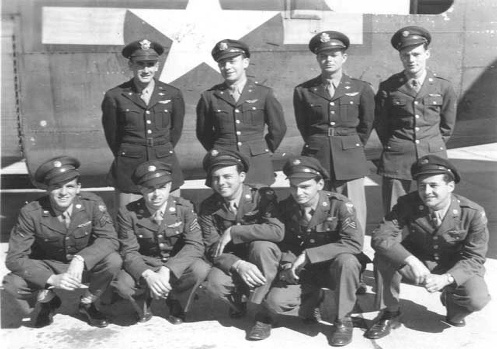
Crew 139
Top Row L to R: 2nd Lt. Troy Cockloft-Co-Pliot, 1st Lt. Morris Cooke-Pilot,
2nd Lt. T.Cellar-Navigator, Sgt. Ralph Trucksis-Armor Gunner, Sgt. Woddier
Jesperson-Radio Operator
Bottom Row L to R: Sgt Donald Tanner-Amour Gunner, Sgt. James Chapman-3rd.
Engineer, William "Willie" Lessera-1st. Engineer, Sgt. Jerry Duran-2nd. Engineer
18 May 1944 Belgrade RR Bridge,Yugoslavia
27 May 1944 Avignon Marshling Yards, France
Source: www.301bg.com/WWII_Missions.cfm
29 May 1944 Wollersdorf -
Source: www.301bg.com/WWII_Missions.cfm
Source: MACR 5444
Source: www.301bg.com/WWII_Missions.cfm
July 21, 1944 Burial of Richard Adam and Lester Peterson
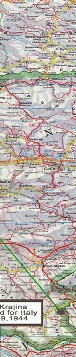
Approximate Crash Site
Terrian of the crash site today
Source: Escape and Repatriation by Edi Selhaus
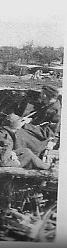
Photo of airmen awaiting a transport to safety
353rd Bombardment Squadron (H)
301st Bombardment Group (H)
Foggia, Italy
301st Bombardment Group (H)
Foggia, Italy
It was the same kind of train on the very same track that only a year earlier had taken him Eastward to
war but now he was traveling westward returning home, his face swollen and red from the burns, his
eyes half shut unable to focus on the passing hills. The hypnotic rhythm of the train's wheels against
the rails lulled him into a deep sleep and the dream returned. Slowly he drifted back to 1943, his
minds eye clearly able to see the last four months with uncanny clarity. So much had happened.
Orphaned at the age of three, Willie Lessera and his older sister Zamera, were raised by their
maternal Portuguese grandmother in Hawaii before immigrating to the mainland and settling in
Sacramento, California to be near other family members. The poor immigrant family had only the
barest of necessities in their new home with clothing and shoes handed down to them by well
meaning family and neighbors.
Their grandmother was only able to provide them with only the basics of food, shelter and a public school education. In spite of
the family’s material poverty, they were wealthy in many other ways. After Willie graduated from high school he found work at a
local slaughterhouse where he was able to make a decent wage to support the small family. His income also allowed him to enjoy
new clothes and to buy a car making the family mobile for the first time. Willie embraced the style of the times and had shoes to
match. One pair in particular were his black Wingtips that he continuously shinned to remove the scuffmarks from a previous
night of hard dancing at the town's nightclubs. Good practice for what was to come as Willie’s civilian life was quickly to be
eclipsed by the country’s all out war effort and the ever growing need for new recruits.
Off to War With No Monkeying Around
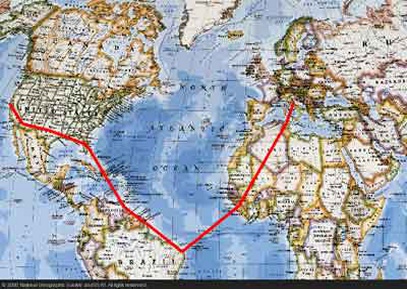
Feeling strongly about America’s involvement in the war, Willie set his sites set on joining the newly formed Army Air Corps by enlisting in February of 1943 at Monterey, California. After taking the oath, like many before him and since, he was sent to Biloxi, Mississippi for basic training. After basic, he was off to the 18th Replacement Wing at Salt Lake City, Utah where airmen were formed into ten-man crews that would be their surrogate families for their time overseas. It was the practice of a senior officer prior to arrival at the base to go through the transport train with a list of his potential flight crew and assemble them together. That's when Ralph Trucksis met Willie and they fast became friends. The two would train in the Salt Lake area for a short while and then move on to Lowry AFB in Denver, Colorado and then headed for more training at Harligen, Texas and finally to Keesler Field in Mississippi for training in B-17's. Their next deployment was to Muroc, California (now Edwards Air Force Base) for some specialized B-24 training. When their final training at Muroc was completed, the crew was sent to Hamilton AFB in Marin County, California just North of San Francisco to pick up a shiny new B-24. Once the crew took charge of the new aircraft, they headed to Phoenix, Arizona, Midland, Texas, and on to Morrison Field, Florida. In Florida they received their orders to ferry the new B-24 to Italy as the the United States was bolstering its air power in Italy in early 1943 in an effort to halt Hitler’s assault on Austria and Yugoslavia. For the last 13 months they had crisscrossed the country from one training center to another and now they were anxious to get overseas and see combat firsthand.
Feeling strongly about America’s involvement in the war, Willie set his sites set on joining the newly formed Army Air Corps by enlisting in February of 1943 at Monterey, California. After taking the oath, like many before him and since, he was sent to Biloxi, Mississippi for basic training. After basic, he was off to the 18th Replacement Wing at Salt Lake City, Utah where airmen were formed into ten-man crews that would be their surrogate families for their time overseas. It was the practice of a senior officer prior to arrival at the base to go through the transport train with a list of his potential flight crew and assemble them together. That's when Ralph Trucksis met Willie and they fast became friends. The two would train in the Salt Lake area for a short while and then move on to Lowry AFB in Denver, Colorado and then headed for more training at Harligen, Texas and finally to Keesler Field in Mississippi for training in B-17's. Their next deployment was to Muroc, California (now Edwards Air Force Base) for some specialized B-24 training. When their final training at Muroc was completed, the crew was sent to Hamilton AFB in Marin County, California just North of San Francisco to pick up a shiny new B-24. Once the crew took charge of the new aircraft, they headed to Phoenix, Arizona, Midland, Texas, and on to Morrison Field, Florida. In Florida they received their orders to ferry the new B-24 to Italy as the the United States was bolstering its air power in Italy in early 1943 in an effort to halt Hitler’s assault on Austria and Yugoslavia. For the last 13 months they had crisscrossed the country from one training center to another and now they were anxious to get overseas and see combat firsthand.
Their path would first take them to the island of Trinidad where the crew felt they needed a mascot for the long flight ahead. So
they bought the perfect mascot, a monkey along with some apples, bananas. With their new mascot onboard they then flew off to
Belem and then Natal in Brazil before making the longest leg of the journey to Dakar, French West Africa. All during the flight
from Trinidad, the temperature at flying altitude was very cold with the warmest part of the aircraft being in the top turret that
was Willie's post. Unfortunately, that’s where the monkey decided to make his home and bathroom rendering the Plexiglas turret
ripe with an unbearable odor as they flew on to the war looming over the horizion. Having survived their cross Atlantic flight and
the smells they eventually arrived in Dakar.
Once the plane was on the ground and safely secured, security protocol dictated that someone had to stay with it at all times. And that’s when Ralph Trucksis was able to coax the monkey out of the turret and tie him to the bomb bay door. Morris Cooke then relieved Ralph on watch. But by the next morning, the monkey was nowhere to be found. It was the happiest day of Willie's life not having to fly with the monkey in his lap. Years later Morris admitted turning the monkey free during the night. Little did they know it then what tragedy and tests of will were before them with the monkey now being the least of their problems.
From Dakar they flew to Tunisia landing in Tunis and then on to their final destination of Ceirgnola, Italy where they reported to the 450th Bombardment Group. The 450th had lost a lot of their B-24's in combat so they kept the plane and Crew 139 was reassigned to a B-17 Bombardment Squadron, the 301st. Bombardment Group, 353rd. group based in nearby Foggia, Italy.
It didn’t make any sense to the unhappy crew that after all their training in B-24s they would be reassigned to a B-17 squadron and additional training. But war and the military both had a way of turning sense on its head. Willie and the crew now needed to spend two additional weeks on the flight line learning about the B-17 Flying Fortress before they would be certified to fly their first mission. Adding to their frustration was that Foggia had only recently been taken over by American forces and there had been little time to build suitable housing for the airmen forcing them to live in tents in the olive groves that surrounded the city. But on the bright side at least they were in Italy, the Monkey was history and their first mission was close at hand.
Once the plane was on the ground and safely secured, security protocol dictated that someone had to stay with it at all times. And that’s when Ralph Trucksis was able to coax the monkey out of the turret and tie him to the bomb bay door. Morris Cooke then relieved Ralph on watch. But by the next morning, the monkey was nowhere to be found. It was the happiest day of Willie's life not having to fly with the monkey in his lap. Years later Morris admitted turning the monkey free during the night. Little did they know it then what tragedy and tests of will were before them with the monkey now being the least of their problems.
From Dakar they flew to Tunisia landing in Tunis and then on to their final destination of Ceirgnola, Italy where they reported to the 450th Bombardment Group. The 450th had lost a lot of their B-24's in combat so they kept the plane and Crew 139 was reassigned to a B-17 Bombardment Squadron, the 301st. Bombardment Group, 353rd. group based in nearby Foggia, Italy.
It didn’t make any sense to the unhappy crew that after all their training in B-24s they would be reassigned to a B-17 squadron and additional training. But war and the military both had a way of turning sense on its head. Willie and the crew now needed to spend two additional weeks on the flight line learning about the B-17 Flying Fortress before they would be certified to fly their first mission. Adding to their frustration was that Foggia had only recently been taken over by American forces and there had been little time to build suitable housing for the airmen forcing them to live in tents in the olive groves that surrounded the city. But on the bright side at least they were in Italy, the Monkey was history and their first mission was close at hand.
Seventeen Combat Missions Later, A Fight For Survival
Finally the day came for Willie and the crews first mission on 23 April 1944. Their target was the aircraft factory at Weiner Nuestadt, Austria. The call came early in the darkened morning hours at 4:00 A.M., after a fitful night of anxiety induced sleep. This was followed in quick succession by breakfast and a briefing before they were off to the flight line. They were airborne without incident and joined the formation for the seven-hour flight. The formation began taking flak as they reached the target but it was less that expected. For their efforts, the 301st destroyed four enemy fighters and one decoy. With the successful mission behind them, they headed home toward the Adriatic Sea and then their base at Foggia. The rest of Willie's sixteen missions were flown on consecutive days with only two days off for rest or a stand down for bad weather.
Willie’s 17th combat mission in the B-17 on May 29, 1944 was to be his last in the war. After taking off from Lucera, Italy they rendezvoused with the rest of their formation on their second mission that day to bomb the aerodrome at Wollersdorf Aerodrome, Austria. While in route, the squadron began to take intense and accurate flak from enemy ground positions. The Fortress took a direct hit to the area of the bomb bay doors, starting a fire inside the aircraft. The number two engine erupted in flames filling the interior with smoke. At first the aircraft went into a steep controlled dive then banked to the left and leveled off. Visibility inside the plane was reduced to zero and they still carried their full load of bombs when the plane began a second dive, leveled and off and went into a spin hitting the ground in a horrific explosion, having crashed on the slopes of Mala Plania, Slovenia.
Finally the day came for Willie and the crews first mission on 23 April 1944. Their target was the aircraft factory at Weiner Nuestadt, Austria. The call came early in the darkened morning hours at 4:00 A.M., after a fitful night of anxiety induced sleep. This was followed in quick succession by breakfast and a briefing before they were off to the flight line. They were airborne without incident and joined the formation for the seven-hour flight. The formation began taking flak as they reached the target but it was less that expected. For their efforts, the 301st destroyed four enemy fighters and one decoy. With the successful mission behind them, they headed home toward the Adriatic Sea and then their base at Foggia. The rest of Willie's sixteen missions were flown on consecutive days with only two days off for rest or a stand down for bad weather.
Willie’s 17th combat mission in the B-17 on May 29, 1944 was to be his last in the war. After taking off from Lucera, Italy they rendezvoused with the rest of their formation on their second mission that day to bomb the aerodrome at Wollersdorf Aerodrome, Austria. While in route, the squadron began to take intense and accurate flak from enemy ground positions. The Fortress took a direct hit to the area of the bomb bay doors, starting a fire inside the aircraft. The number two engine erupted in flames filling the interior with smoke. At first the aircraft went into a steep controlled dive then banked to the left and leveled off. Visibility inside the plane was reduced to zero and they still carried their full load of bombs when the plane began a second dive, leveled and off and went into a spin hitting the ground in a horrific explosion, having crashed on the slopes of Mala Plania, Slovenia.
The ten crewmembers that fateful day was made up of:
Francis DiDomizio – Pilot, Otto Hines-Co – Pilot, Jerome Cohen – Navigator, Charles Wensley – Bombardier, William Lessera - Engr/Gunner, George Bertuzzi – Radioman, Richard Adam - Lower Turret, Lester Peterson - Waist Gunner, Harold Swenson - Tail Gunner and Jimmie G. O'Leary – Photographer.
Two eyewitness accounts of the crash have been recorded one by Sgt. Jack R. Nichols, Ball Turret Gunner, A/C 42-30385, 23 position, describe what he saw as the plane crashed, "Ship #42-97580 went into a steep dive, smoke trailing from its number two engine. Shortly after, I saw one chute open, then in quick succession I saw three more open. (The) Plane banked to (the) left and two more chutes came out, one delayed in opening. (The) Plane went into a dive, pulled out and another chute came out. Then (the) ship went into a spin and shortly after pulled out and seemed to disintegrate. I noticed what seemed to be bombs bursting on the ground below the aircraft. Also noticed one piece of A/C (aircraft) burning and many pieces scattered over the mountain. I saw seven chutes open but believe all personnel got out safely."
The other eyewitness account of the crash is from a second aircraft, S/Sgt. Harry A. Fichtner, a tail gunner on A/C 42-3384 in 22 position described that he saw, eight chutes coming out of the aircraft before the crash.
Jumping out of an airplane at any altitude especially under combat conditions is not for the faint of heart. Landing in a foreign and hostile environment is certainly a scant reward for your efforts. But if your lucky enough to meet up with old Mother Earth softly and without breaking any bones or being injured or helpless that may be the only reward your going to have for all your daring efforts to survive. If you do arrive safely on the ground, your next duty is to quickly disappear and to try and make your way back to your base so that you can fight again another day. Of the ten crew members aboard the plane only eight would survive the crash, one would die of his injures later, two would end up as POWS and five would be rescued by Partisans. After the crash, both the pilot Francis DiDomizio and radioman George Bertuzzi were captured by the Germans and sent off to a German POW camp. Richard Adam the lower turret gunner and Lester Peterson the waist gunner were both Killed in Action upon impact. Co-pilot Otto Hines died of his injuries two months later after having sustained numerous major injuries during his bailout. Those who survived the crash and were rescued included navigator Jerome Cohen, bombardier Charles Wensley, engineer-gunner William Lessera, tail gunner Harold Swenson and photographer Jimmie G. O'Leary.
As the fortress went into a dive, the co-pilot Otto Hines fought hard to it level as the crew bailed out. When it came time for him to leave the aircraft, he somehow prematurely opened his parachute in his lap while still seated. This resulted in a very difficult bailout. Without a fully deployed chute and the plane now dropping to 1000 feet in altitude he hit the ground hard resulting in massive injuries. Hines sustained a fractured vertebrae, two broken legs and internal injuries. Because of his strong physical condition and the intensive treatment received while in the partisan underground hospital the co-pilot or Captain as he was called by the crew, survived for two months before sucummoning to his extensive injuries. He is buried close to the makeshift hospital. The burial took place on 21 July 1944 at 17:00 hours. Leaving his wife, Arline Hinds of Boulder, Colorado a war widow. It is not know if they had any children. The two fellow airmen then left for their long and dangerous journey to Kamniska Bela.
WHO WROTE THIS? Cite it here
In his Diary he wrote:
"I saw him bail out myself and his chute did not open! He had pulled the ripcord while still in the cockpit by mistake. He went out with his chute bundled up in his arms! There was only about 1000 ft. of altitude where he jumped, so he didn’t have much of chance to look at it! He told me not to worry about him, he said he was going to die and it was just part of the game, some of us make it and some of us don’t. What a guy he was- I’ll never forget him as long as I live as he made it possible for me to get out of that ill fated ship on that fateful morning of May 29th 1944 at 9:05."
After their bailout, The Pilot Francis DiDomizio and Radioman George Bertuzzi met up on the ground near a three-story farmhouse where some local girls were tended to their injuries. Later a German patrol raided the farmhouse and took them both prisoner. They were sent off to a POW camp named Stalag Luft 3 where they were put into solitary confinement. Ironically on the 4th of July they were later moved to Stalag IIVA that was near Gross Tychow, Germany.
Jerome Cohen and Charles Wensley parachuted to safety onto the plains of Mala Plania and were met by Slovene partisans who quickly took them into the forest. Photographer Jimmie G. O'Leary also parachuted to safety and was located by partisans. After drinking some whiskey, given to him by the partisans, O’Leary was taken back to the crash site in an attempt to recover any rations that might have blown free of the explosion.
The view was different from the ground. On that day Janko Urbanc (Partisan name Olga), a member of the Kamnik Department Committee, was responsible for the interaction between the courier service and the army and was engaged in his business in the Moravska valley. While observing the action of the warplanes in the sky, he saw a heavy bomber crash not far from where he stood. He mounted his horse and took a shortcut to the scene of the disaster. He recounted his participation in the event.
"A heavy bomber approached from the direction of Limbarska Gora flying toward Velika Planina. It was obvious that something was wrong with the aircraft, a few seconds later it crashed into the mountains. I was directed to respond immediately. My first responsibility was to reach the airmen before the Germans posted in nearby villages arrived. When I arrived at the crash site, I found that the Partisan couriers were the first ones there. We were struck by the horror of the scene. Two crewmembers were dead and one was seriously injured. The injured airman (Otto Hines) was taken to the closest hospital, Kamniska Bela. The two diseased were buried at the site. Janko Urbanc (Partisan Name Olga). Later that night Vinko Domitrovic, an assistant medical orderly with the Slandrova Brigade was summoned by the staff. His medical talents were needed so he and a courier left immediately. We walked all night, passing Kamniska Bristrica and headed for Jezersko. We finally stopped at a tent under some fir trees. Local Partisans and couriers were inside together with three wounded airmen. Together with the wounded airmen we were sent onto to our new hospital in Kamniska Bela. The new hospital was nothing more than a cave that was a two-hour walk through rugged terrain. The condition of the least wounded improved daily. After ten days they were fully recovered. They stayed to take care of the captain as they called him. But nothing more could be done for his spinal fracture and he died on July 20, 1944. He was buried at the hospital and his two fellow airmen left for their long and dangerous journey to Bela Krajina."
Francis DiDomizio – Pilot, Otto Hines-Co – Pilot, Jerome Cohen – Navigator, Charles Wensley – Bombardier, William Lessera - Engr/Gunner, George Bertuzzi – Radioman, Richard Adam - Lower Turret, Lester Peterson - Waist Gunner, Harold Swenson - Tail Gunner and Jimmie G. O'Leary – Photographer.
Two eyewitness accounts of the crash have been recorded one by Sgt. Jack R. Nichols, Ball Turret Gunner, A/C 42-30385, 23 position, describe what he saw as the plane crashed, "Ship #42-97580 went into a steep dive, smoke trailing from its number two engine. Shortly after, I saw one chute open, then in quick succession I saw three more open. (The) Plane banked to (the) left and two more chutes came out, one delayed in opening. (The) Plane went into a dive, pulled out and another chute came out. Then (the) ship went into a spin and shortly after pulled out and seemed to disintegrate. I noticed what seemed to be bombs bursting on the ground below the aircraft. Also noticed one piece of A/C (aircraft) burning and many pieces scattered over the mountain. I saw seven chutes open but believe all personnel got out safely."
The other eyewitness account of the crash is from a second aircraft, S/Sgt. Harry A. Fichtner, a tail gunner on A/C 42-3384 in 22 position described that he saw, eight chutes coming out of the aircraft before the crash.
Jumping out of an airplane at any altitude especially under combat conditions is not for the faint of heart. Landing in a foreign and hostile environment is certainly a scant reward for your efforts. But if your lucky enough to meet up with old Mother Earth softly and without breaking any bones or being injured or helpless that may be the only reward your going to have for all your daring efforts to survive. If you do arrive safely on the ground, your next duty is to quickly disappear and to try and make your way back to your base so that you can fight again another day. Of the ten crew members aboard the plane only eight would survive the crash, one would die of his injures later, two would end up as POWS and five would be rescued by Partisans. After the crash, both the pilot Francis DiDomizio and radioman George Bertuzzi were captured by the Germans and sent off to a German POW camp. Richard Adam the lower turret gunner and Lester Peterson the waist gunner were both Killed in Action upon impact. Co-pilot Otto Hines died of his injuries two months later after having sustained numerous major injuries during his bailout. Those who survived the crash and were rescued included navigator Jerome Cohen, bombardier Charles Wensley, engineer-gunner William Lessera, tail gunner Harold Swenson and photographer Jimmie G. O'Leary.
As the fortress went into a dive, the co-pilot Otto Hines fought hard to it level as the crew bailed out. When it came time for him to leave the aircraft, he somehow prematurely opened his parachute in his lap while still seated. This resulted in a very difficult bailout. Without a fully deployed chute and the plane now dropping to 1000 feet in altitude he hit the ground hard resulting in massive injuries. Hines sustained a fractured vertebrae, two broken legs and internal injuries. Because of his strong physical condition and the intensive treatment received while in the partisan underground hospital the co-pilot or Captain as he was called by the crew, survived for two months before sucummoning to his extensive injuries. He is buried close to the makeshift hospital. The burial took place on 21 July 1944 at 17:00 hours. Leaving his wife, Arline Hinds of Boulder, Colorado a war widow. It is not know if they had any children. The two fellow airmen then left for their long and dangerous journey to Kamniska Bela.
WHO WROTE THIS? Cite it here
In his Diary he wrote:
"I saw him bail out myself and his chute did not open! He had pulled the ripcord while still in the cockpit by mistake. He went out with his chute bundled up in his arms! There was only about 1000 ft. of altitude where he jumped, so he didn’t have much of chance to look at it! He told me not to worry about him, he said he was going to die and it was just part of the game, some of us make it and some of us don’t. What a guy he was- I’ll never forget him as long as I live as he made it possible for me to get out of that ill fated ship on that fateful morning of May 29th 1944 at 9:05."
After their bailout, The Pilot Francis DiDomizio and Radioman George Bertuzzi met up on the ground near a three-story farmhouse where some local girls were tended to their injuries. Later a German patrol raided the farmhouse and took them both prisoner. They were sent off to a POW camp named Stalag Luft 3 where they were put into solitary confinement. Ironically on the 4th of July they were later moved to Stalag IIVA that was near Gross Tychow, Germany.
Jerome Cohen and Charles Wensley parachuted to safety onto the plains of Mala Plania and were met by Slovene partisans who quickly took them into the forest. Photographer Jimmie G. O'Leary also parachuted to safety and was located by partisans. After drinking some whiskey, given to him by the partisans, O’Leary was taken back to the crash site in an attempt to recover any rations that might have blown free of the explosion.
The view was different from the ground. On that day Janko Urbanc (Partisan name Olga), a member of the Kamnik Department Committee, was responsible for the interaction between the courier service and the army and was engaged in his business in the Moravska valley. While observing the action of the warplanes in the sky, he saw a heavy bomber crash not far from where he stood. He mounted his horse and took a shortcut to the scene of the disaster. He recounted his participation in the event.
"A heavy bomber approached from the direction of Limbarska Gora flying toward Velika Planina. It was obvious that something was wrong with the aircraft, a few seconds later it crashed into the mountains. I was directed to respond immediately. My first responsibility was to reach the airmen before the Germans posted in nearby villages arrived. When I arrived at the crash site, I found that the Partisan couriers were the first ones there. We were struck by the horror of the scene. Two crewmembers were dead and one was seriously injured. The injured airman (Otto Hines) was taken to the closest hospital, Kamniska Bela. The two diseased were buried at the site. Janko Urbanc (Partisan Name Olga). Later that night Vinko Domitrovic, an assistant medical orderly with the Slandrova Brigade was summoned by the staff. His medical talents were needed so he and a courier left immediately. We walked all night, passing Kamniska Bristrica and headed for Jezersko. We finally stopped at a tent under some fir trees. Local Partisans and couriers were inside together with three wounded airmen. Together with the wounded airmen we were sent onto to our new hospital in Kamniska Bela. The new hospital was nothing more than a cave that was a two-hour walk through rugged terrain. The condition of the least wounded improved daily. After ten days they were fully recovered. They stayed to take care of the captain as they called him. But nothing more could be done for his spinal fracture and he died on July 20, 1944. He was buried at the hospital and his two fellow airmen left for their long and dangerous journey to Bela Krajina."
About a month later, Janko Urbanc returned to the crash site. He had always been curious as to the fate of the other airmen.
Could they have hidden in one of the numerous haylofts in the surrounding countryside? On his return a local herdsman informed
him that a stranger in uniform had indeed been found hiding in one of nearby haylofts. This airman was William Lessera.
Apparently he hid for two days and nights without any nourishment. The herdsman had first noticed him drinking rainwater from
a hole he had dug at the base of the hayloft. He had lost his boots when his parachute opened so they provided him with some
hobnail shoes for the journey to the hospital. While at the hospital his first and second-degree burns were treated with an
ointment made from mushrooms that grew on local trees. He recovered a short time later. He and his escort started the long and
dangerous journey to the Partisan airstrip in Bela Krejina. It is believed that both William Lessera and Charles Wensley made this
journey together. The reason for that assumption is a letter of safety that was found in Willie's effects in later years. It was
translated as follows:
The District Department Kamnik June 10,1944
Letter of safe (safety)
There are wandering two American parachutists in our area. They jumped in parachute on the Little Plain. We are asking all stations working in the terrain for support. Help them as much as possible and provide them secure transport though our area. Everyone who gets this information must be aware, it is confidential. In no case can they fall in hands of our enemy.
The guys are:
William M. Lessera
Sgt. A.S.N. 39408692
Sacramento, California
Charles Wensley
2nd. Lt. 0-679418
Austin, Texas
Death to fascism-freedom to our nation!
To all stations. Help them not to get caught by enemy
The District Department Kamnik June 10,1944
Letter of safe (safety)
There are wandering two American parachutists in our area. They jumped in parachute on the Little Plain. We are asking all stations working in the terrain for support. Help them as much as possible and provide them secure transport though our area. Everyone who gets this information must be aware, it is confidential. In no case can they fall in hands of our enemy.
The guys are:
William M. Lessera
Sgt. A.S.N. 39408692
Sacramento, California
Charles Wensley
2nd. Lt. 0-679418
Austin, Texas
Death to fascism-freedom to our nation!
To all stations. Help them not to get caught by enemy
All the while Willie and Charles were sleeping by day and making their way to the departure point at night. On June 23rd. Willie's
original crew (No.139) was shot down and all crewmen were taken POW.
Among the remaining items Willie kept from that experience was a small spiral-bound notebook. In that note book there was an entry that stated, Lost my mother's
wedding ring in a hayloft last night dated June 25, 1944. The only two other important entries were his arrival on July 17th at the departure point and the date of departure via a U.S. aircraft. The date of departure was July 19, 1944 some 47 days since his bailout. The flight to safely took him to northern Italy. The next entry said that he was in Bari, Italy, and not yet out of
danger. On July 23rd Willie wrote in his notebook that a jerry two motor plane bombed near his location "23 bombs, 500 yards away" this was also scratched into his ration tin. His sister Mera Barnes received a telegram on July 25th stating that he had returned to duty. On July 30th he was examined by the squadron surgeon and was found unfit for combat duty and ordered
home. He sailed for the U.S. on August 16th and arrived on September 2nd, 1944.
One other interesting item in the notebook was a letter in beautiful penmanship written in Yugoslovian. I have recently had it translated. It reads as follows:
To Vilan Lessen 39408692 U.S.O.F. in memory,
"Comrade, I know it's difficult for you to be with us but, we cannot offer you anything better. It's also hard on us, but we got used to our partisan lives and are happy with a piece of bread, as long as we deal blows to the enemy. Now, as we know that you (aliens) prefer us to the Germans we are pretty sure the war is going to end soon, and we are eager to fight even harder. It's a pity, comrade Lessen, that we cannot talk to each other cause I would have a lot of things to tell you, as well as to the comrade Verudan, but as you will read through these lines you will know what I'm talking about. When you will get back to your homeland remember in what circumstances we fought against the superior force of the
Germans."
Sincerely yours
Brko
Among the remaining items Willie kept from that experience was a small spiral-bound notebook. In that note book there was an entry that stated, Lost my mother's
wedding ring in a hayloft last night dated June 25, 1944. The only two other important entries were his arrival on July 17th at the departure point and the date of departure via a U.S. aircraft. The date of departure was July 19, 1944 some 47 days since his bailout. The flight to safely took him to northern Italy. The next entry said that he was in Bari, Italy, and not yet out of
danger. On July 23rd Willie wrote in his notebook that a jerry two motor plane bombed near his location "23 bombs, 500 yards away" this was also scratched into his ration tin. His sister Mera Barnes received a telegram on July 25th stating that he had returned to duty. On July 30th he was examined by the squadron surgeon and was found unfit for combat duty and ordered
home. He sailed for the U.S. on August 16th and arrived on September 2nd, 1944.
One other interesting item in the notebook was a letter in beautiful penmanship written in Yugoslovian. I have recently had it translated. It reads as follows:
To Vilan Lessen 39408692 U.S.O.F. in memory,
"Comrade, I know it's difficult for you to be with us but, we cannot offer you anything better. It's also hard on us, but we got used to our partisan lives and are happy with a piece of bread, as long as we deal blows to the enemy. Now, as we know that you (aliens) prefer us to the Germans we are pretty sure the war is going to end soon, and we are eager to fight even harder. It's a pity, comrade Lessen, that we cannot talk to each other cause I would have a lot of things to tell you, as well as to the comrade Verudan, but as you will read through these lines you will know what I'm talking about. When you will get back to your homeland remember in what circumstances we fought against the superior force of the
Germans."
Sincerely yours
Brko
On May 27th, 1990 at Mala Planina (small mountain), Kamnik, a plaque was placed at the crash site. The following is a portion of
the Ceremonial Speech. Greoge Bertuzzi attended this event.
IS THIS A SPEECH? IF SO WHO WAS THE SPAEKER AND CITE THEM HERE
"Dear Comrades, dear guest, visitors, dear lovers of the mountains, all of you who have been gathered here to have our common remembrances of that tragic event from 46 years ago. Here on this level stopped the engines of the Allied Bomber and two young lives extinguished inside of it. The third member of the crew was seriously wounded and died later...Five survivors were rescued by the Partisans and two were captured by the Germans... Their lives were broken just in the moment they were on duty to fight towards our common enemy..."
To recall the event we are unveiling the memorial tablet with the following dedication:
In remembrance to victims Airmen of downed allied plane B-17crashed here on May 29, 1944.
Mr. Janez Prezelj President of the Association of War Veterans Kamnik Area
Final disposition of the crew.
Francis DiDomizio - Pilot, POW
George Bertuzzi - Radioman, POW
Otto Hines-Co - Pilot, Died of wounds
Richard Adam - Lower Turret, Killed in Action
Lester Peterson - Waist Gunner, Killed in Action
Jerome Cohen - Navigator, Rescued
Charles Wensley - Bombardier, Rescued
William Lessera - Engr/Gunner, Rescued
Harold Swenson - Tail Gunner, Rescued
Jimmie G. O'Leary - Photographer, Rescued
Willie Lassera’s war Record:
Willie flew the following seventeen sorties:
23 April 44 - Wiener Neustadt Aircraft Factory (2 Sorties)
24 April 44 - Polesti Marshaling Yard, Romania (2 Sorties)
25 April 44 - Operational Flying Time Only—No Sortie
26 April 44 - Piombino Docks and shipping, Italy
29 April 44 - Toulon Oil Storage, France
30 April 44 - Milan/Bresso Aircraft Factory, Italy
05 May 44 – Ploesti (North) Marshaling Yard (2 Sorties)
10 May 44 - Weiner Neustadt Aircraft Factory, Austria (2 Sorties)
13 May 44 - Alvisio RR Viaduct, Italy
18 May 44 - Belgrade RR Bridge, Yugoslavia
25 May 44 - Leon Visseaux Marshaling Yard, France
27 May 44 - Avignon Marshaling Yards, France
29 May 44 - Wollersdorf Aerodrome, Austria (2 Sorties)
Willie was awarded the following decorations:
Good Conduct Medal
Air Medal with 2 Oak Leaf Clusters
European Mediterranean Theater Medal with 4 Bronze Stars
Purple Heart
American Theater Ribbon
European, African, Middle Eastern Campaign Ribbon
Italian Battle Star
He also fought in the following battles and Campaigns
Naples-Foggia
Normandy
Northern France
Air offensive Europe
Acknowledgements
Willie Lessera died tragically in 1972 having never talked about his wartime experiences. The accounts described here within are the result of countless hours of research, personal interviews, correspondence and materials generously loaned to me by crewmembers and their families in my efforts to reconstruct their story. Much of my research was derived from the book Evasion and Repatriation, a first hand account of the incident written by Edi Selhaus and Janez Zerov. While I attempted to contact both Mr. Selaus and his co-author Mr. Zerov, my efforts did not result in a response from either gentleman.
Special thanks must go the Edith DiDomizio, the widow of Francis, and to George Bertuzzi whose letters and photos that appear here helped bring the story to life. Also letters from James Chapman and Ralph Trucksis were instrumental in starting me on this journey back in time. Letters from Tom Visentin, nephew of the late Francis DiDomizio and his knowledge of the POW camps offered me an invaluable and important perspective. The excellent book, Goodbye Liberty Belle by Jim Merritt inspired me to write this story. Thanks are also in order to Irene Jaksa Zupancia for all her translations that helped tell the story from the Yugoslavian perspective.
Thanks to Phil Pasquini for the meticulous proofreading and editing.
And a special thanks to Willie's sister, my mother, Zamera Barnes (wife of Howard.)
Thanks to all the veterans who’s sacrifices and dedication in their efforts to bring us the freedom that we enjoy today.
Mike Barnes - Nephew of Willie Lessera
Every effort has been made to maintain the accuracy of this story. Any errors or omissions are unintentional. For additions, corrections, or comments contact mikebarnes@pacbell.net
References:
MACR 5444 (Missing Aircraft Report)
Evasion and Repatriation, by Edi Selhaus and Janez Zerov
Who Fears? The 301st In War and Peace, by Kenneth P. Werrell
Fueling the Fires of Resistance, by William M. Leary
Jimmie G. O'Leary Diary
Journal of Events by Charles LaVelle Wensley
Interviews with Zamera Lessera-Barnes
Letters From: Edith DiDomizio, George Bertuzzi, James Chapman, Ralph Trucksis, Igor Tratnik, Robert Grayson, and Tom Visentin.
Translations by Irene Jaksa Zupancia
Sacramento Bee
IS THIS A SPEECH? IF SO WHO WAS THE SPAEKER AND CITE THEM HERE
"Dear Comrades, dear guest, visitors, dear lovers of the mountains, all of you who have been gathered here to have our common remembrances of that tragic event from 46 years ago. Here on this level stopped the engines of the Allied Bomber and two young lives extinguished inside of it. The third member of the crew was seriously wounded and died later...Five survivors were rescued by the Partisans and two were captured by the Germans... Their lives were broken just in the moment they were on duty to fight towards our common enemy..."
To recall the event we are unveiling the memorial tablet with the following dedication:
In remembrance to victims Airmen of downed allied plane B-17crashed here on May 29, 1944.
Mr. Janez Prezelj President of the Association of War Veterans Kamnik Area
Final disposition of the crew.
Francis DiDomizio - Pilot, POW
George Bertuzzi - Radioman, POW
Otto Hines-Co - Pilot, Died of wounds
Richard Adam - Lower Turret, Killed in Action
Lester Peterson - Waist Gunner, Killed in Action
Jerome Cohen - Navigator, Rescued
Charles Wensley - Bombardier, Rescued
William Lessera - Engr/Gunner, Rescued
Harold Swenson - Tail Gunner, Rescued
Jimmie G. O'Leary - Photographer, Rescued
Willie Lassera’s war Record:
Willie flew the following seventeen sorties:
23 April 44 - Wiener Neustadt Aircraft Factory (2 Sorties)
24 April 44 - Polesti Marshaling Yard, Romania (2 Sorties)
25 April 44 - Operational Flying Time Only—No Sortie
26 April 44 - Piombino Docks and shipping, Italy
29 April 44 - Toulon Oil Storage, France
30 April 44 - Milan/Bresso Aircraft Factory, Italy
05 May 44 – Ploesti (North) Marshaling Yard (2 Sorties)
10 May 44 - Weiner Neustadt Aircraft Factory, Austria (2 Sorties)
13 May 44 - Alvisio RR Viaduct, Italy
18 May 44 - Belgrade RR Bridge, Yugoslavia
25 May 44 - Leon Visseaux Marshaling Yard, France
27 May 44 - Avignon Marshaling Yards, France
29 May 44 - Wollersdorf Aerodrome, Austria (2 Sorties)
Willie was awarded the following decorations:
Good Conduct Medal
Air Medal with 2 Oak Leaf Clusters
European Mediterranean Theater Medal with 4 Bronze Stars
Purple Heart
American Theater Ribbon
European, African, Middle Eastern Campaign Ribbon
Italian Battle Star
He also fought in the following battles and Campaigns
Naples-Foggia
Normandy
Northern France
Air offensive Europe
Acknowledgements
Willie Lessera died tragically in 1972 having never talked about his wartime experiences. The accounts described here within are the result of countless hours of research, personal interviews, correspondence and materials generously loaned to me by crewmembers and their families in my efforts to reconstruct their story. Much of my research was derived from the book Evasion and Repatriation, a first hand account of the incident written by Edi Selhaus and Janez Zerov. While I attempted to contact both Mr. Selaus and his co-author Mr. Zerov, my efforts did not result in a response from either gentleman.
Special thanks must go the Edith DiDomizio, the widow of Francis, and to George Bertuzzi whose letters and photos that appear here helped bring the story to life. Also letters from James Chapman and Ralph Trucksis were instrumental in starting me on this journey back in time. Letters from Tom Visentin, nephew of the late Francis DiDomizio and his knowledge of the POW camps offered me an invaluable and important perspective. The excellent book, Goodbye Liberty Belle by Jim Merritt inspired me to write this story. Thanks are also in order to Irene Jaksa Zupancia for all her translations that helped tell the story from the Yugoslavian perspective.
Thanks to Phil Pasquini for the meticulous proofreading and editing.
And a special thanks to Willie's sister, my mother, Zamera Barnes (wife of Howard.)
Thanks to all the veterans who’s sacrifices and dedication in their efforts to bring us the freedom that we enjoy today.
Mike Barnes - Nephew of Willie Lessera
Every effort has been made to maintain the accuracy of this story. Any errors or omissions are unintentional. For additions, corrections, or comments contact mikebarnes@pacbell.net
References:
MACR 5444 (Missing Aircraft Report)
Evasion and Repatriation, by Edi Selhaus and Janez Zerov
Who Fears? The 301st In War and Peace, by Kenneth P. Werrell
Fueling the Fires of Resistance, by William M. Leary
Jimmie G. O'Leary Diary
Journal of Events by Charles LaVelle Wensley
Interviews with Zamera Lessera-Barnes
Letters From: Edith DiDomizio, George Bertuzzi, James Chapman, Ralph Trucksis, Igor Tratnik, Robert Grayson, and Tom Visentin.
Translations by Irene Jaksa Zupancia
Sacramento Bee